

When Ice Meets Trees

A Dangerous Combination in North Carolina

North Carolina’s landscape is known for its beauty, with rolling fields, wooded property lines, and towering mature trees. But when winter brings freezing rain instead of gentle snow, those same trees can quickly become one of the biggest hazards on the landscape.
Unlike northern states that primarily deal with heavy snowfall, North Carolina’s most damaging winter storms often come from ice. Freezing rain coats everything it touches — roads, power lines, buildings, and especially trees. While it may look beautiful at first, that glassy coating adds tremendous weight. Even a small amount of ice can turn branches into overloaded structures that bend, split, or snap without warning.

The Root of the Problem
A key reason trees fall so easily in ice storms comes from something most people never see: the root system.
Trees in North Carolina, like most trees, do not typically grow deep taproots. Instead, their roots spread outward and stay relatively close to the surface where oxygen and nutrients are more available. On average, over 90% of a tree’s root system is located within the top 12 to 24 inches of soil. In the Southeast, clay-heavy soils, seasonal moisture, and compacted layers further limit deep root growth.
This means trees rely more on a wide, shallow anchoring system than on deep underground support. When winter soils are already wet and saturated, and then heavy ice loads weigh down branches, that shallow root system may not be enough to hold the tree upright. The result can be uprooted trees, snapped trunks, and falling limbs, sometimes even with only light wind.
Why Ice Storms Are So Damaging
Snow can often be brushed off or may fall away as temperatures change. Ice behaves differently. It locks onto every surface and builds layer upon layer. Branches become rigid, unable to flex, until the stress becomes too much. Breaks happen suddenly and unpredictably.
Falling limbs are dangerous enough, but entire trees can come down during ice events, especially in heavily wooded areas like much of North Carolina.
The Risk at Briar Creek Farm

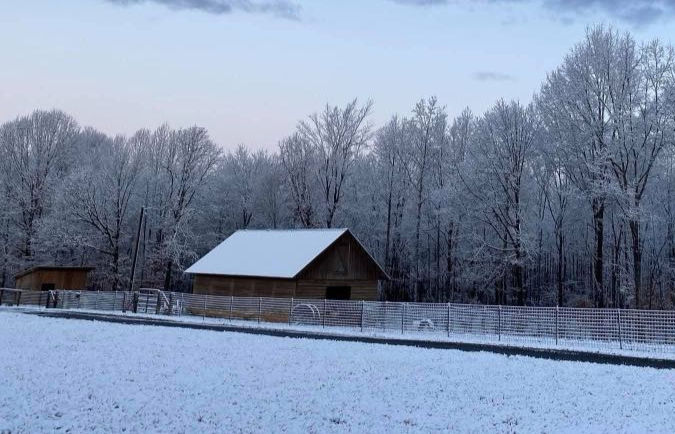
At Briar Creek Farm, the property includes many tall, mature trees that provide shade and natural beauty throughout the year. However, during an ice storm, those same trees pose a serious threat.
If a tree or large limb falls, it could:
Crush goat barns and shelters
Flatten fencing, creating escape risks for livestock
Damage feed storage or equipment areas
Bring down power lines, leading to outages that affect water systems and animal care
A broken fence or damaged shelter during freezing conditions isn’t just a repair issue — it becomes an animal safety concern. Livestock rely on secure enclosures and protection from the elements, and storm damage can quickly escalate into an emergency.
More Than a Winter Nuisance
Ice storms in North Carolina are deceptive. They don’t always bring dramatic snowfall totals, but they can bring widespread structural damage, power outages, and hazardous debris. In wooded rural areas, the combination of heavy ice and shallow-rooted trees makes these storms particularly destructive.
Understanding how trees grow and why they fail under ice loads helps explain why preparation matters. Tree maintenance, structural checks, and storm planning are essential steps in protecting property and animals. Ice may look quiet and harmless, but in North Carolina’s tree-filled landscapes, it can be one of winter’s most serious threats.


Comments